The choice between Wi-Fi speakers and Bluetooth speakers comes down to what you actually value: sound quality and whole-home coverage, or portability and simplicity. Here’s how the two technologies genuinely differ in 2026, and which one fits your situation.
In this guide:
- Wi-Fi speakers generally provide better audio quality and range than Bluetooth speakers
- Bluetooth speakers are more portable and easier to use, better for casual, on-the-go listening
- Wi-Fi speakers support multiple rooms and deeper app control
- Bluetooth’s real generational leap this year, and why “Bluetooth 6.0” isn’t the current version anymore
- What to actually buy at each price point
The core differences
Audio quality. Wi-Fi speakers generally win here. They can handle higher bandwidth, meaning they stream lossless audio without the compression Bluetooth typically applies. If you’re an audiophile, this is a meaningful, audible difference, not just a spec-sheet number.
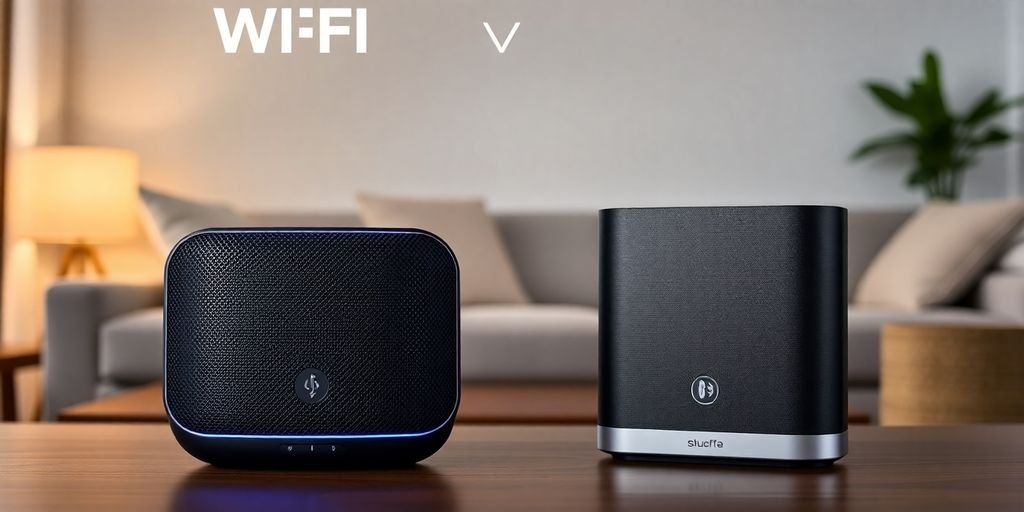
Range and connectivity. Wi-Fi has a clear edge. Bluetooth’s usable range is roughly 30-40 feet, and walls shorten that further. Wi-Fi, riding on your home network, covers a much larger area and handles multiple connected devices without the one-to-one limitation Bluetooth has. If you want genuine whole-house audio, Wi-Fi is the way to go.
Latency. Both technologies can introduce delay between sending and receiving audio, but it’s more commonly noticeable on Bluetooth, since those connections are more prone to interference. A well-configured Wi-Fi network usually has the edge here, worth knowing if you’re using speakers alongside video or gaming, where even a small delay is distracting.
Where Wi-Fi speakers win
Multi-room support. Systems like Sonos make syncing music across every room in the house genuinely easy, no carrying a speaker from room to room. Even standard Wi-Fi setups are increasingly capable of this.
App integration. Dedicated apps typically offer far more than volume control, EQ settings, playlist management, streaming service integration, and voice control, letting you fine-tune the listening experience well beyond what Bluetooth’s device-level controls allow.
Future-proofing. Wi-Fi speakers can receive over-the-air updates that add features and improve performance over time, and they’re generally quicker to support new audio formats as standards evolve.
Where Bluetooth speakers win
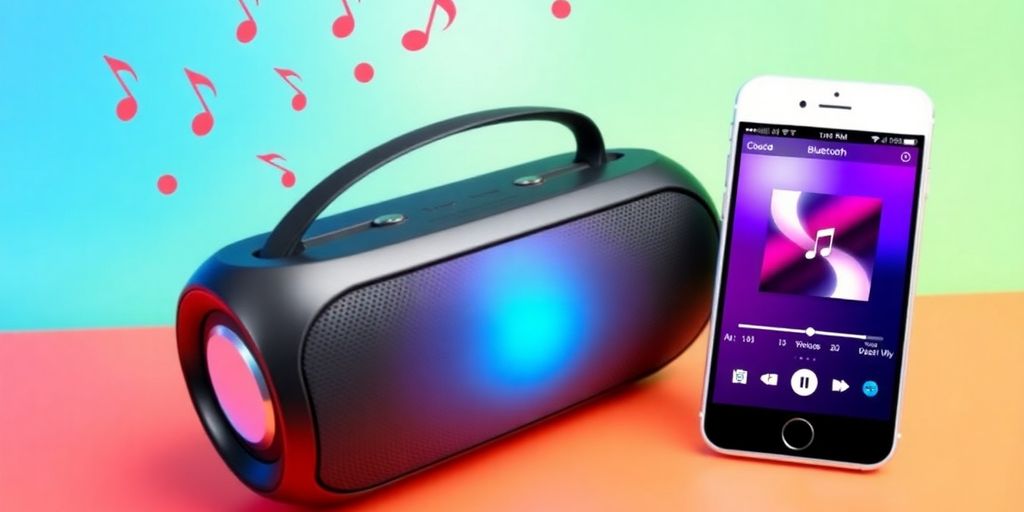
Portability. This is Bluetooth’s core advantage. Most Bluetooth speakers are compact, battery-powered, and need no network connection, ideal for picnics, beach trips, or simply moving between rooms without setup.
Ease of use. Pairing takes seconds: turn the speaker on, select it in your device’s Bluetooth settings, and you’re connected. No app, no network password, no configuration.
Battery life. This varies widely by size and volume level, smaller speakers might run a few hours, larger ones ten or more. If you need all-day use, check the specific battery rating before buying, and expect louder volumes to drain it faster.
Bluetooth’s real advancement in 2026, and where the “latest version” claim goes wrong
It’s worth correcting a common misconception here directly: Bluetooth 6.0 is no longer the current version. Bluetooth 6.0 shipped in September 2024, and the Bluetooth SIG has since moved to a twice-yearly release cadence: 6.1 arrived in May 2025, 6.2 in November 2025, and 6.3 in May 2026, the actual current specification as of this writing.
That said, version number and what’s actually in your speaker are two different things. Most consumer speakers on shelves right now still run Bluetooth 5.3 or 5.4 chipsets, since chip manufacturers and product cycles typically lag a year or more behind a new core spec. The genuinely useful 6.x-era features, Channel Sounding for precise device-to-device distance measurement, faster connection intervals, and improved privacy through randomized address rotation, are real and shipping, but mostly in newer flagship devices rather than across the board yet. Don’t assume a speaker markets itself accurately just because it says “Bluetooth 6” on the box, check which specific sub-version and features it actually supports.
Codecs matter as much as the version number. aptX Adaptive dynamically adjusts bitrate based on connection quality, reducing dropouts without sacrificing sound, and aptX HD-compatible devices are increasingly common. If sound quality on Bluetooth matters to you, checking codec support is often more useful than checking the raw Bluetooth version.
Integration between the two is increasing
Wi-Fi and Bluetooth aren’t purely competing technologies anymore. Hybrid systems now use Wi-Fi for high-quality home streaming and switch to Bluetooth automatically when you’re out. Smart home hubs with audio capability are becoming central control points for both your speakers and other connected devices. If you’re building out a broader smart home setup around this kind of integration, our smart home gadgets guide covers what’s genuinely worth adding.
Price points and what you actually get
| Budget | What to expect | Example |
| Under £50 | Bluetooth only, casual listening, portable | Compact entry-level Bluetooth speaker |
| £50–£200 | Both types available; multi-room (Wi-Fi) or ruggedness/waterproofing (Bluetooth) | Varies by brand |
| Over £200 | Wi-Fi: lossless streaming, premium build. Bluetooth: powerful sound, portability, durability | Premium models vary; compare current UK prices |
Wi-Fi speakers at the budget end are rare, and when you do find one, be cautious about sound quality and feature completeness. At the high end, it’s worth thinking about longevity: Wi-Fi speakers more often receive software updates that keep adding value over time, which can make them a better long-term investment if you’re building toward a connected home setup.
Use cases: which one for what
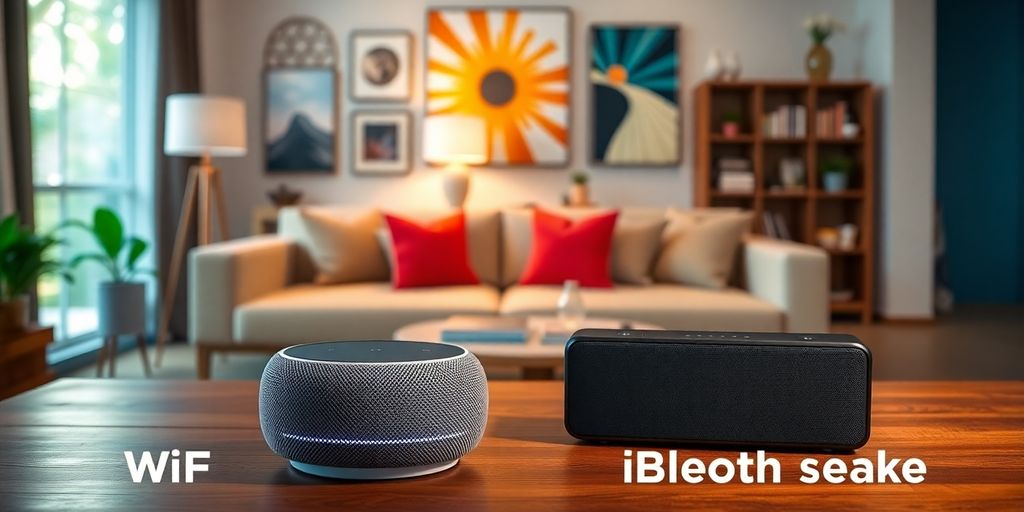
Home audio systems: Wi-Fi, for whole-house coverage and direct access to streaming services without needing your phone as a go-between.
Outdoor activities: Bluetooth, for obvious reasons, no power outlet or network connection needed, and pairing takes seconds.
Casual, at-home listening: Either works. This genuinely comes down to preference, simplicity (Bluetooth) versus higher ceiling on sound quality (Wi-Fi).
Setup and day-to-day use
Wi-Fi speakers typically require connecting to your home network via an app and entering your Wi-Fi password, straightforward, but occasionally you’ll hit network compatibility or signal issues. Bluetooth speakers pair faster initially, though Bluetooth connections can be finicky when juggling multiple devices or dealing with interference. Once set up, Wi-Fi speakers generally offer deeper day-to-day control through their apps; Bluetooth speakers are controlled directly from your phone with fewer advanced options.
Frequently asked questions
What is the main difference between Wi-Fi and Bluetooth speakers?
Wi-Fi speakers connect to your home network and can stream directly from the internet. Bluetooth speakers connect directly to your phone or tablet for playback.
Which type of speaker offers better sound quality?
Generally Wi-Fi, since it can handle higher-quality audio streams without the compression Bluetooth typically applies.
Are Wi-Fi speakers more difficult to set up than Bluetooth speakers?
Usually, yes, they need to join your home network, while Bluetooth speakers pair in seconds with no network involved.
Can I use Wi-Fi speakers outdoors?
Not practically, they need a stable network connection. Bluetooth speakers are built for exactly this kind of portable, connection-free use.
Do Bluetooth speakers have a longer battery life than Wi-Fi speakers?
Yes, typically. Bluetooth speakers are designed around portability and don’t need to stay connected to a network, which helps battery life.
Which speakers are better for listening to music in multiple rooms?
Wi-Fi speakers, since they can sync with each other over your network to play the same audio in different rooms simultaneously.
Is Bluetooth 6.0 really the latest version?
No. As of 2026, Bluetooth Core 6.3 is the current specification, released in May 2026, with 6.1 and 6.2 released in between. In practice, most consumer speakers you’ll actually buy still run Bluetooth 5.3 or 5.4 chipsets, so check the specific version and codec support on any device you’re considering rather than assuming the newest label means the newest hardware.