Picking the right AI voice tool is only half the job: the other half is understanding AI voice cloning for creators: what you’re actually allowed to do, what your audience is entitled to know, and where the genuinely murky bits still sit. None of this is about being paranoid. It’s about not finding out the hard way, through a demonetised video or an angry email, that something you assumed was fine wasn’t.
This hub covers the questions that come up again and again once creators move past “which tool sounds best” and start actually publishing: how voice cloning works and where its ethical lines sit, what an AI avatar even is, how to protect your own voice from being cloned without your say-so, whether platforms will penalise AI-assisted content, and whether audiences can actually tell the difference anyway.
In this post, you’ll learn:
- How AI voice cloning actually works, and where the ethical and legal lines currently sit
- Where AI avatars fit in, and when they’re worth using
- How to protect your own voice from being cloned without permission
- Whether platforms will actually penalise AI-assisted content, and what disclosure really requires
- Whether audiences can genuinely tell AI voice from human, according to the research

Why This Matters More Than It Used To
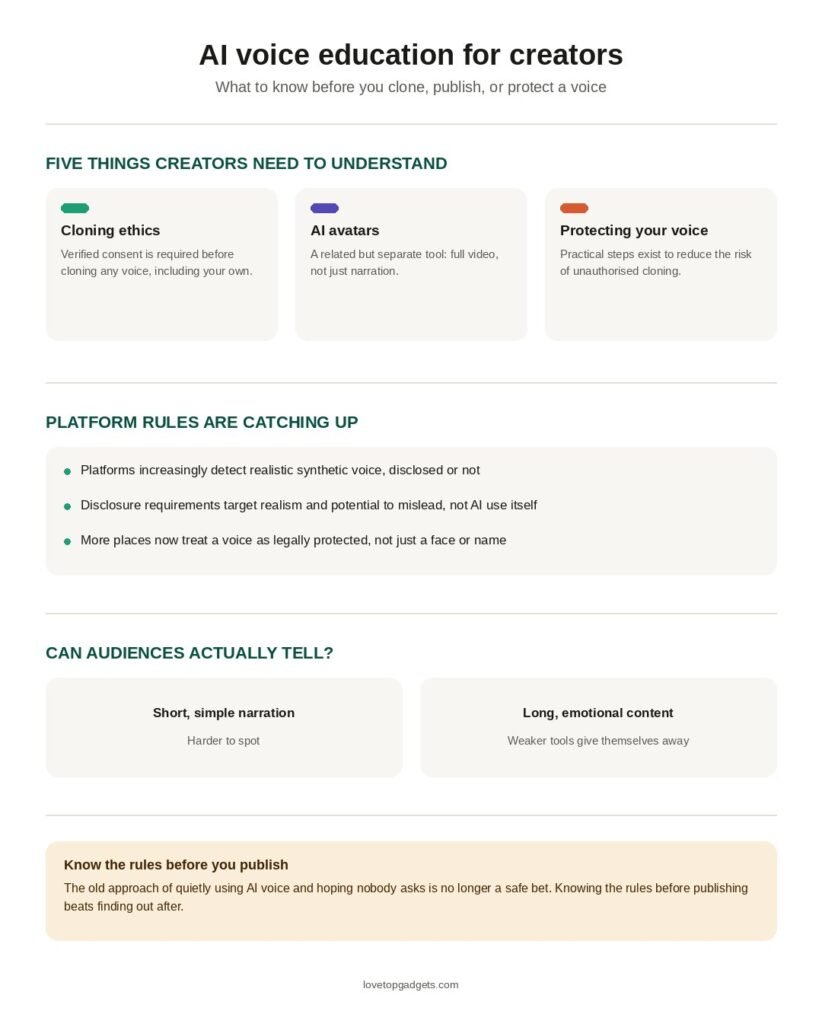
A year or two ago, most of this was theoretical. AI voice was good enough for hobby projects but not convincing enough to raise real questions. That’s changed. Voice cloning is now accurate enough to fool casual listeners, platforms have started actively scanning for undisclosed synthetic content rather than relying on creators to self-report, and several places have begun treating a person’s voice as something with real legal protection, not just their face or name.
Practically, that means the old approach of quietly using AI voice and hoping nobody asks is no longer a safe bet. YouTube, for instance, now runs detection systems that flag realistic synthetic voice and video even when it hasn’t been disclosed, and channels have been demonetised over exactly this. Knowing the rules before you publish is a lot less painful than finding out after.
What’s Covered in This Cluster
How AI Voice Cloning Works (And the Ethics Every Creator Should Know)
The mechanics of how a handful of seconds of audio becomes a usable clone, and the consent question every creator should be asking before they clone any voice, including their own.
What Is an AI Avatar, and Should You Actually Use One?
Where avatars fit alongside voice cloning, what they’re actually good for, and where they tend to feel gimmicky rather than genuinely useful.
How to Protect Your Voice and Likeness From AI Cloning Misuse
Practical steps for reducing the risk of someone cloning your voice without permission, and what options exist if it happens anyway.
Will Platforms Penalize AI-Assisted Videos? What Creators Should Know
A breakdown of how platforms like YouTube actually treat AI-assisted content, what triggers a disclosure requirement, and what doesn’t.
AI vs Human Content: What Audiences Can (and Can’t) Actually Tell
An honest look at how good AI voice detection by ear really is in 2026, and where it still gives itself away.
Where to Go Next
- New to AI voice tools generally? Start with the pillar guide, AI Voice Tools for Content Creators, for the full overview
- Comparing specific tools? Head to the AI Voice Tool Comparisons hub for side-by-side testing
- Ready for the ethics and rules? Start with How AI Voice Cloning Works, since the other posts in this cluster build on it
FAQ
Do I legally need permission to clone a voice?
In most cases, yes, particularly for anyone other than yourself. Reputable AI voice platforms now require verified consent before allowing a clone to be created, and using someone’s voice without permission carries real legal risk in a growing number of places.
Will using an AI voice get my video demonetised?
Not automatically. Platforms are generally targeting realistic content that could mislead viewers, not AI use itself. The safest approach is to disclose when your content qualifies and check the specific platform’s current policy, since these rules are still evolving.
Can listeners actually tell if a voice is AI-generated?
It depends on the tool and the content. Short, simple narration is harder to spot. Longer or more emotionally complex content tends to expose weaker tools faster.